

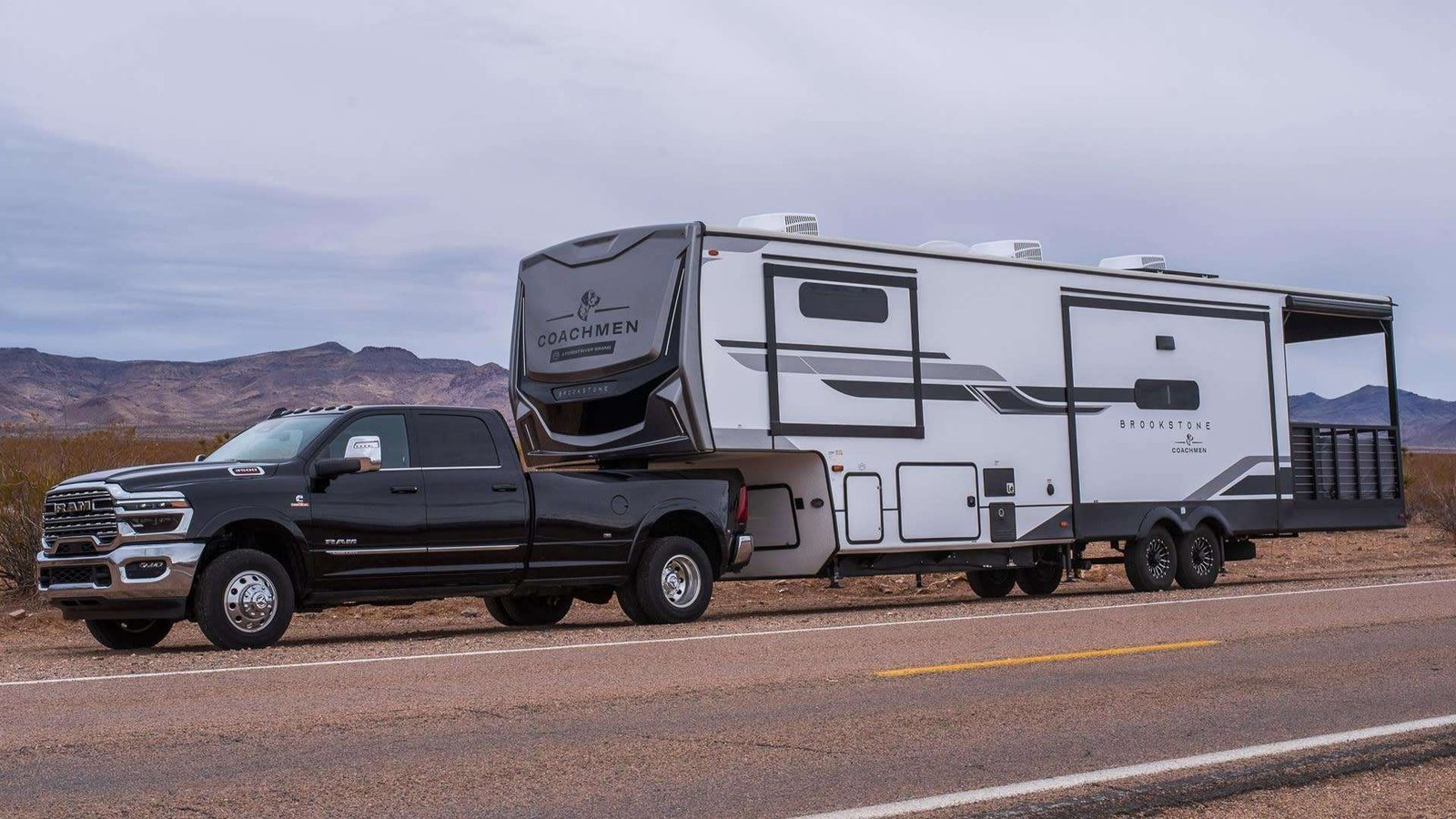
If a truck has Dual Rear Wheels (DRW), it has two wheels on each side of the rear axle. People
commonly call these trucks dually trucks or simply duallys. You will often see this setup on
heavy-duty pickup trucks, work trucks, and some large commercial vans. Manufacturers add dual
rear wheels to improve a truck’s ability to carry heavy loads and tow large trailers. The four rear
tires spread the load across a larger contact area. This design also gives the truck a wider rear
stance, which can improve stability when carrying or towing heavy equipment.
DRW trucks come with some important differences from standard two-wheel rear setups. The
wheels, tires, axles, and suspension components must all work together to handle the additional
weight.
How Does a DRW Truck Work?
A dually uses four tires on the rear axle instead of two. Two tires sit on each side of the truck.
The inner and outer wheels use different offsets to maintain enough space between the tires.
This arrangement allows the truck to support more weight across its rear axle. Instead of placing
the entire rear load on two tires, the truck distributes it across four tires.
The wider rear footprint can also provide additional stability. This becomes particularly useful
when towing a large trailer or carrying a heavy payload.
Understanding DRW Wheel Offset
Wheel offset plays an important role in a dually setup. The correct offset keeps the tires in the
proper position and prevents them from touching each other.
Front Wheels
Front wheels on many dually trucks use a relatively high positive offset. This design places the
wheel farther inward toward the truck.
The offset also helps keep the tire within the fender. It provides enough clearance around the
brake components, hubs, and other suspension parts.
Rear Outer Wheels
The outer rear wheels usually use a significant negative offset. This offset moves the wheel
outward from the mounting surface.
The design creates space between the inner and outer tires. Proper spacing prevents the tires from
rubbing against each other while the truck moves or carries a heavy load.
Rear Inner Wheels
The inner rear wheels typically use a positive offset. This position moves the wheel closer to the
center of the truck.
The inner wheel sits between the truck’s frame and the outer wheel. Both rear wheels attach to
the same rear hub assembly, but their offsets help maintain the necessary tire clearance.
Why Tire Spacing Matters on a Dually
Tire spacing is critical on a DRW truck. The inner and outer tires must have enough clearance to
prevent contact.
Tires that rub against each other can generate significant heat and friction. This contact can
damage the tire sidewalls over time. The risk becomes greater when the truck carries a heavy
load.
Sidewall damage can eventually cause a tire failure or blowout. For this reason, owners should
always use wheels and tires designed for the specific dually application.
Proper tire pressure also matters. Drivers should follow the truck manufacturer’s recommended
tire pressure and load ratings.
Do All Six Wheels Need to Be Replaced?
Not necessarily. The answer depends on the wheel size and the setup.
Some owners reuse the factory rear inner wheels when they install aftermarket wheels with the
same diameter as the original equipment wheels. In that situation, they may only need four new
wheels: two for the front and two for the rear outer positions.
However, a larger aftermarket wheel diameter can change the requirements. The rear inner
wheels may also need replacement to keep all six wheels at the same diameter.
Always check the truck manufacturer’s specifications and the wheel manufacturer’s fitment
requirements before changing a dually’s wheels.
How Does a DRW Truck Distribute Weight?
A DRW system distributes rear axle weight across four tires instead of two. This reduces the load
carried by each individual tire. For example, imagine a heavy payload resting over the rear axle.
A conventional single-rear-wheel truck places that load across two rear tires. A dually spreads
the load across four tires. The additional tires increase the available contact area with the road.
The truck can therefore handle substantial payloads when the entire vehicle meets its rated
capacity.
The wider rear stance can also help the truck resist sideways forces. Strong crosswinds, trailer
movement, and air pressure from passing vehicles can all affect a heavily loaded truck. The
truck’s overall stability still depends on many factors. Tire condition, suspension design, weight
distribution, road conditions, trailer setup, and driving speed all matter.
DRW Trucks and Towing Capacity
Dually trucks can offer high towing capacities, especially when manufacturers pair them with
heavy-duty frames, axles, brakes, suspension systems, and powerful engines.
They can tow several types of trailers, including:
Conventional travel trailers
Fifth-wheel trailers
Gooseneck trailers
Heavy equipment trailers
Large utility trailers
Commercial cargo trailers
However, the presence of six tires does not automatically determine the truck’s maximum towing
capacity. Always check the specific truck’s Gross Vehicle Weight Rating (GVWR), Gross
Combined Weight Rating (GCWR), payload rating, axle ratings, and towing rating.
Where Are Dually Trucks Used?
Dually trucks serve many purposes. Their high payload and towing capabilities make them
useful for both commercial and recreational applications.
Heavy-Duty Industries
Construction companies often use dually trucks to transport equipment, tools, building materials,
and machinery.
Agricultural businesses also use them to move trailers, livestock equipment, farm machinery, and
other heavy loads.
Other industries that commonly use heavy-duty trucks include:
Construction
Agriculture
Landscaping
Equipment transportation
Material delivery
Mining
Manufacturing
Commercial contracting
Dually trucks can also handle demanding road conditions. However, four-wheel-drive capability,
tire selection, ground clearance, and driver technique also influence performance on mud, dirt,
and rough roads.
Recreational Vehicles and Trailers
Many RV owners choose dually trucks because they can handle large trailers. Fifth-wheel and
gooseneck trailers can place substantial weight on the truck’s rear axle.
A properly equipped dually can provide the payload and stability needed for large recreational
trailers. This makes the configuration popular among people who travel with heavy campers.
Dually trucks can also tow trailers carrying motorcycles, boats, jet skis, ATVs, and other
recreational equipment.
Commercial Work
Dually trucks also serve businesses that regularly move heavy equipment or materials. Builders,
contractors, landscapers, and material suppliers can use them for demanding towing and hauling
jobs.
Their larger payload and towing capacity can reduce the need for a larger commercial vehicle for
certain applications.
Advantages of a Dually Truck
A DRW truck offers several benefits when the job requires substantial hauling or towing
capability.
Higher Payload Potential
Four rear tires can support more weight than two when the truck’s chassis and axle system have
the appropriate ratings.
Greater Stability
The wider rear stance can provide additional stability during heavy-duty towing and hauling.
Improved Load Distribution
Four rear tires distribute the rear load across a larger contact area.
Strong Towing Capability
Many heavy-duty dually trucks come with powerful engines, strong axles, heavy-duty brakes,
and reinforced suspension systems designed for demanding towing.
Better Support for Large Trailers
The configuration works particularly well with large fifth-wheel and gooseneck trailers that place
considerable weight over the rear axle.
Disadvantages of a Dually Truck
A dually also comes with some trade-offs. The truck is wider than a standard pickup. This can
make parking, navigating narrow roads, and using tight driveways more difficult. It also has six
tires instead of four. Owners therefore face higher tire replacement costs when all six tires
require replacement. The additional wheels can also increase maintenance requirements. Drivers
must regularly inspect tire pressure, tread condition, wheel fitment, and the space between the
rear tires. A dually can also feel different from a standard pickup during everyday driving. Its
wider body, heavier components, and larger turning requirements can make it less convenient for
some daily-use situations.
DRW vs. SRW: What’s the Difference?
The main difference comes down to the number of rear tires.
SRW, or Single Rear Wheel, trucks have one rear tire on each side. That gives them two rear tires
in total. DRW, or Dual Rear Wheel, trucks have two rear tires on each side. That gives them four
rear tires in total. SRW trucks often work well for everyday driving, moderate hauling, and
lighter towing. DRW trucks make more sense when the vehicle regularly needs higher payload or
towing capability. The right choice depends on the truck’s intended use, required payload, trailer
weight, operating conditions, and manufacturer ratings.
Conclusion
DRW means Dual Rear Wheels, and the configuration gives a truck four tires across its rear
axle. This setup helps distribute heavy loads and provides a wider rear footprint for demanding
towing and hauling applications. Dually trucks are especially useful in construction, agriculture,
commercial transportation, and RV towing. However, the six-wheel setup also requires careful
attention to wheel offset, tire spacing, tire pressure, and load ratings. For anyone considering a
dually, the most important step is to match the truck, wheels, tires, and trailer to the
manufacturer’s specifications. Proper fitment and correct weight distribution help the truck
perform safely and reliably under heavy loads.
